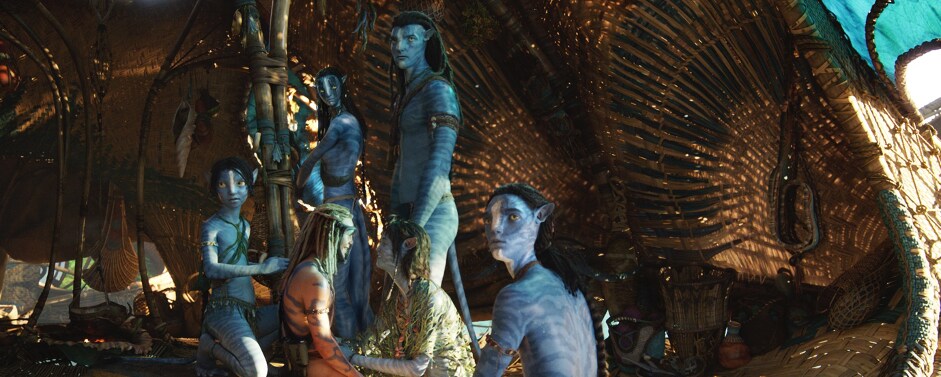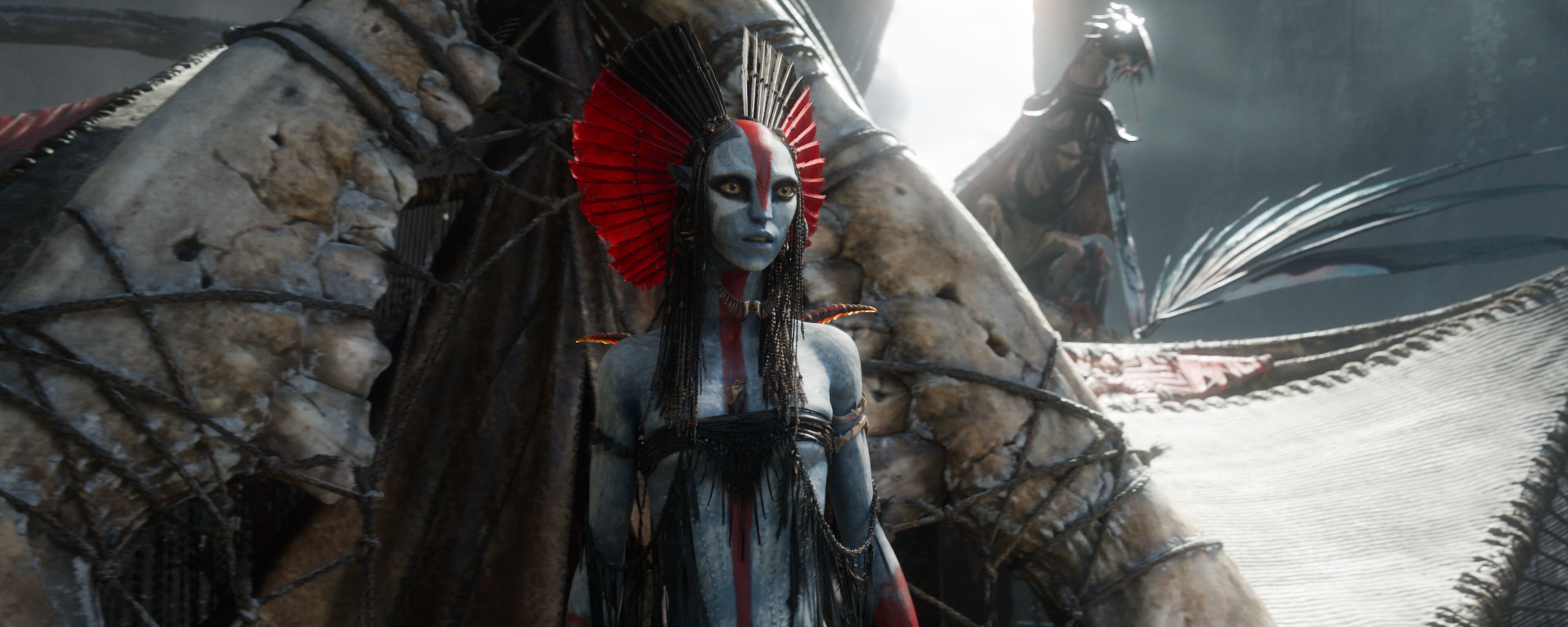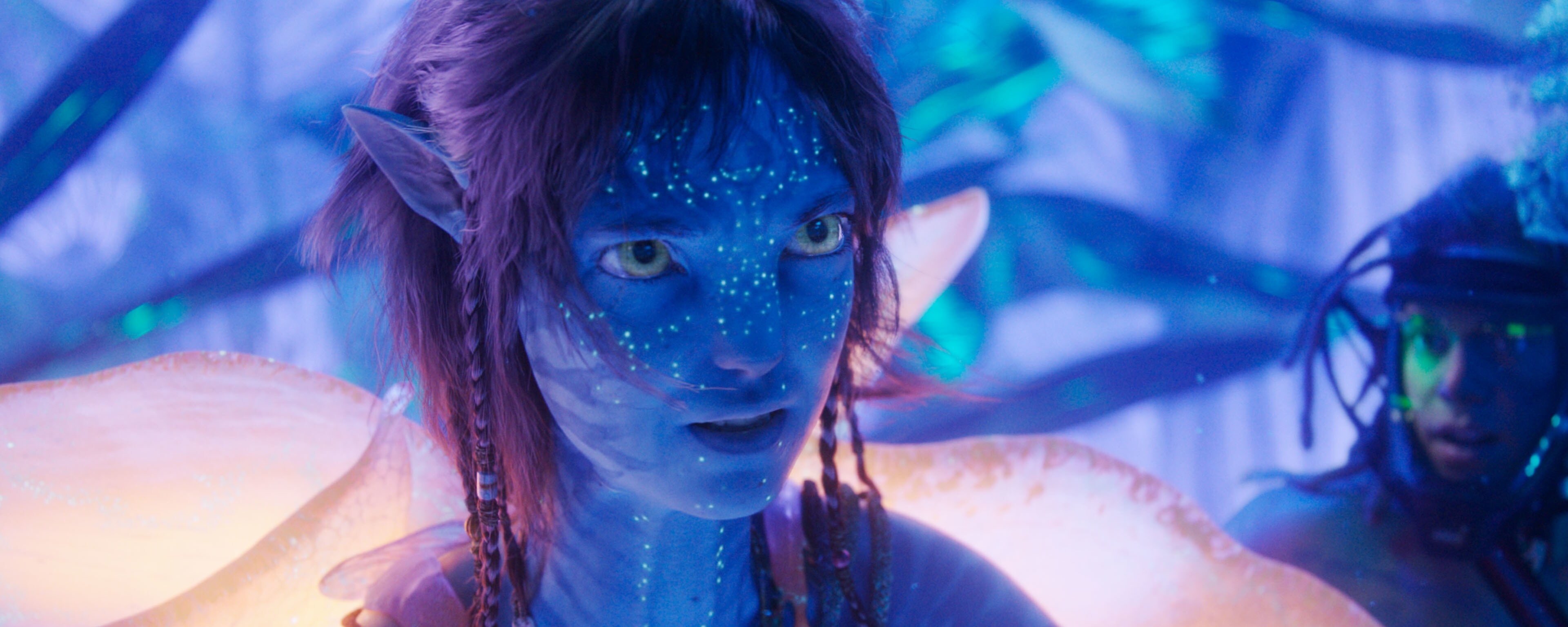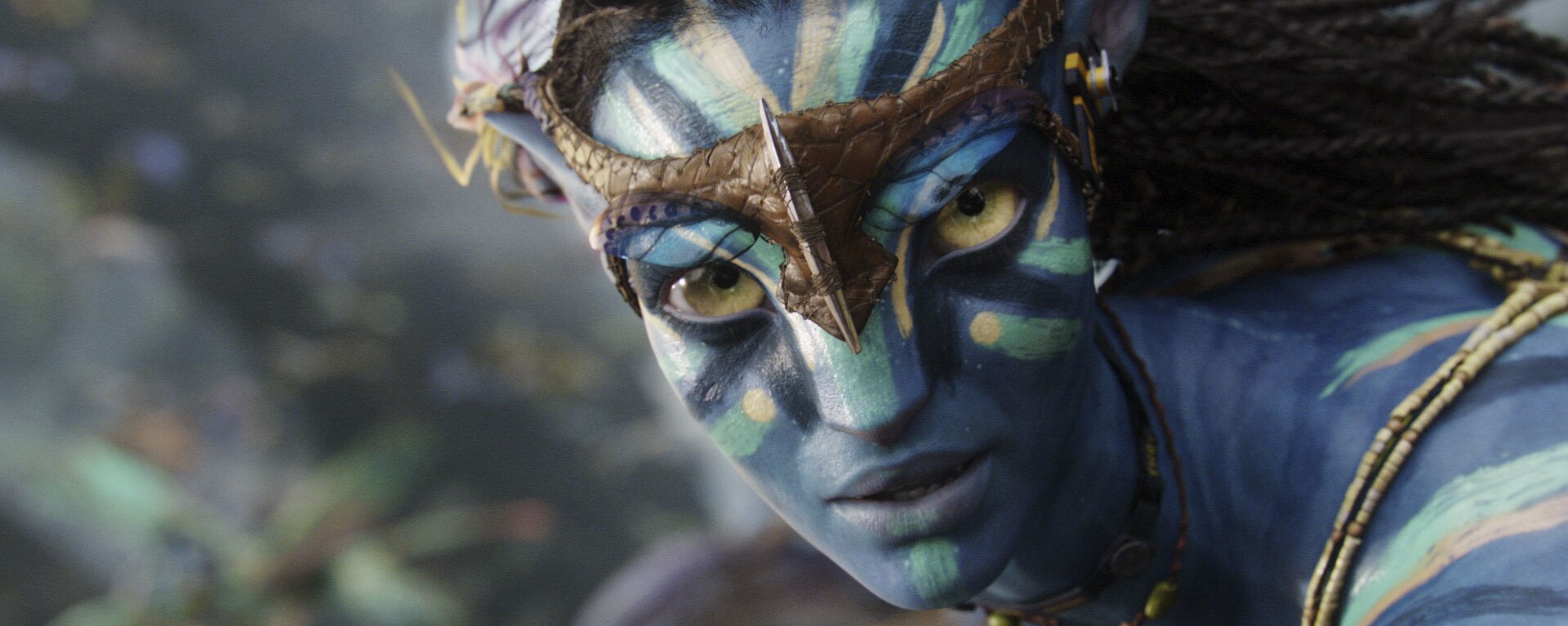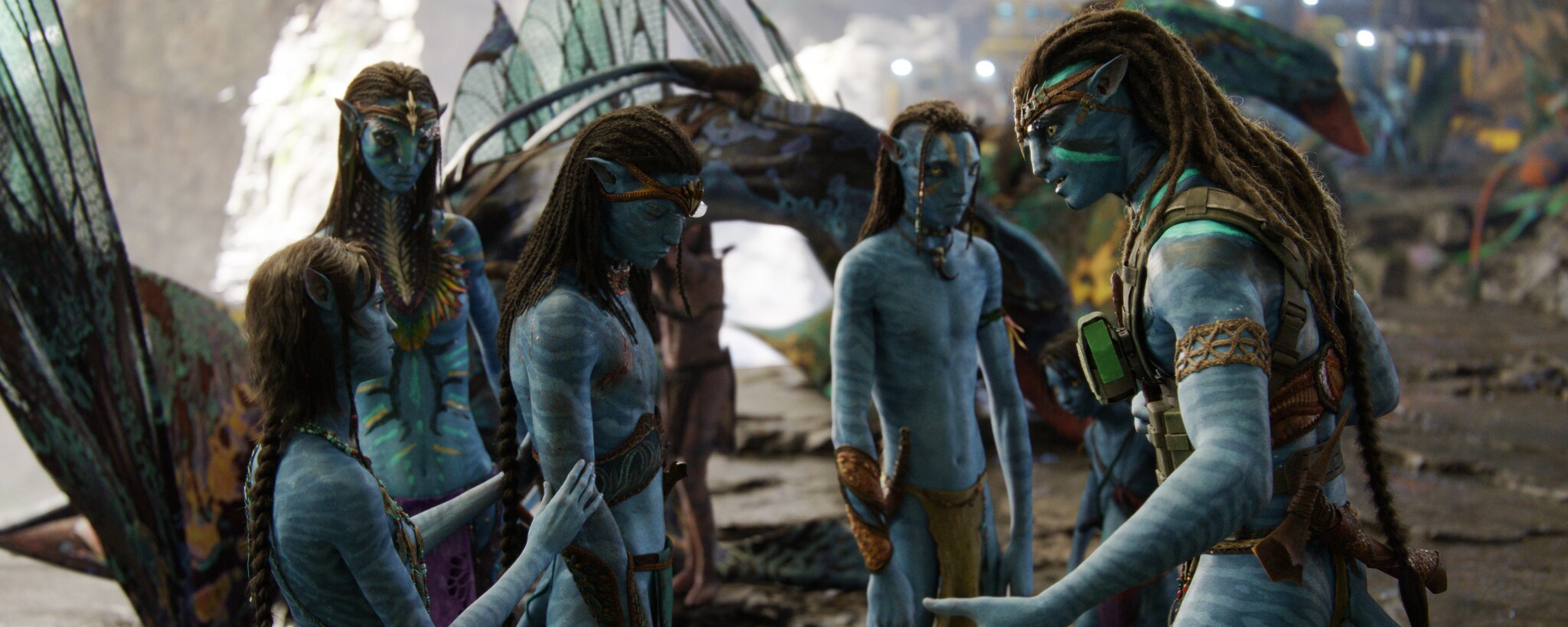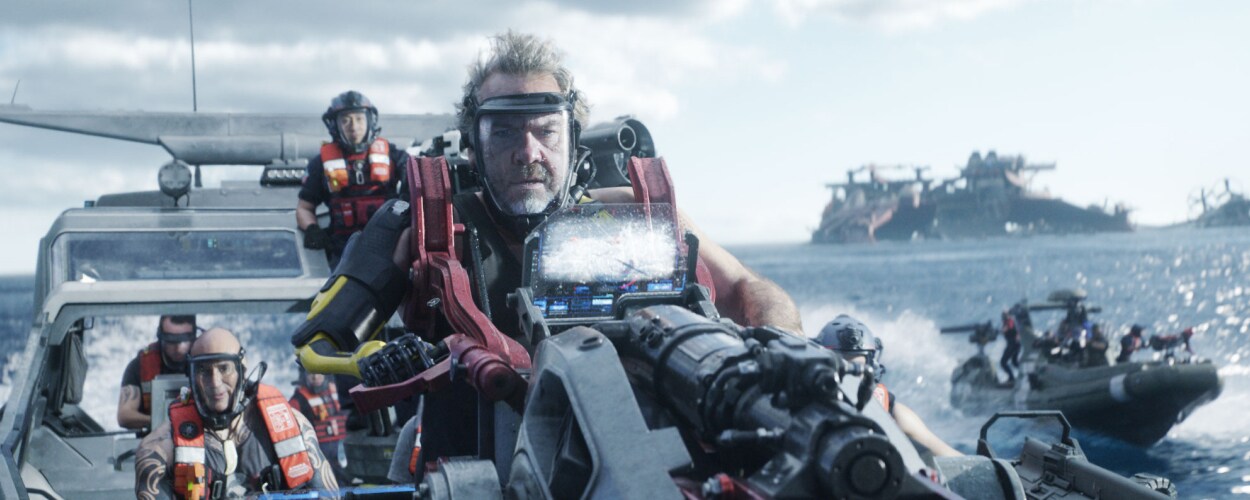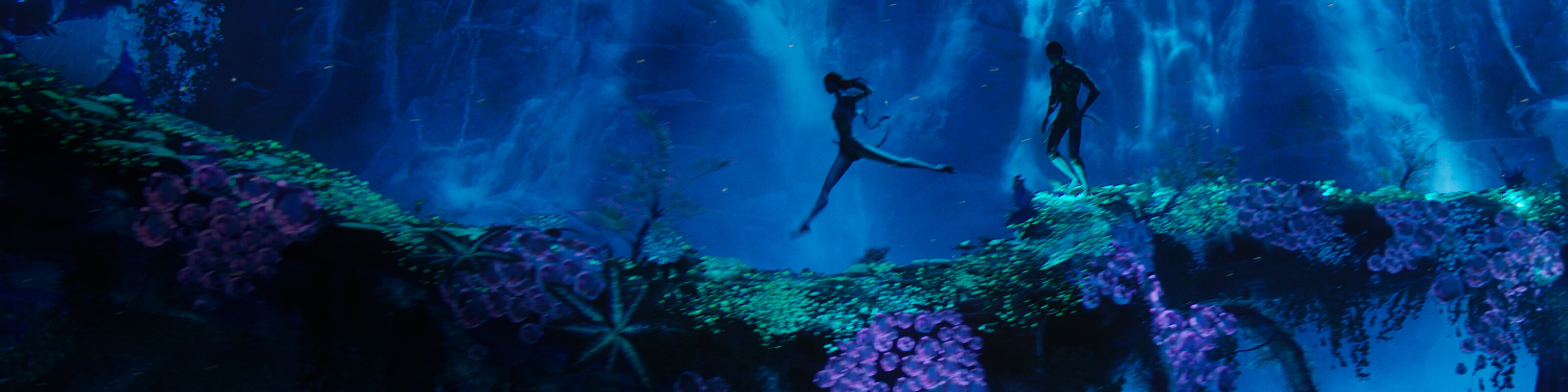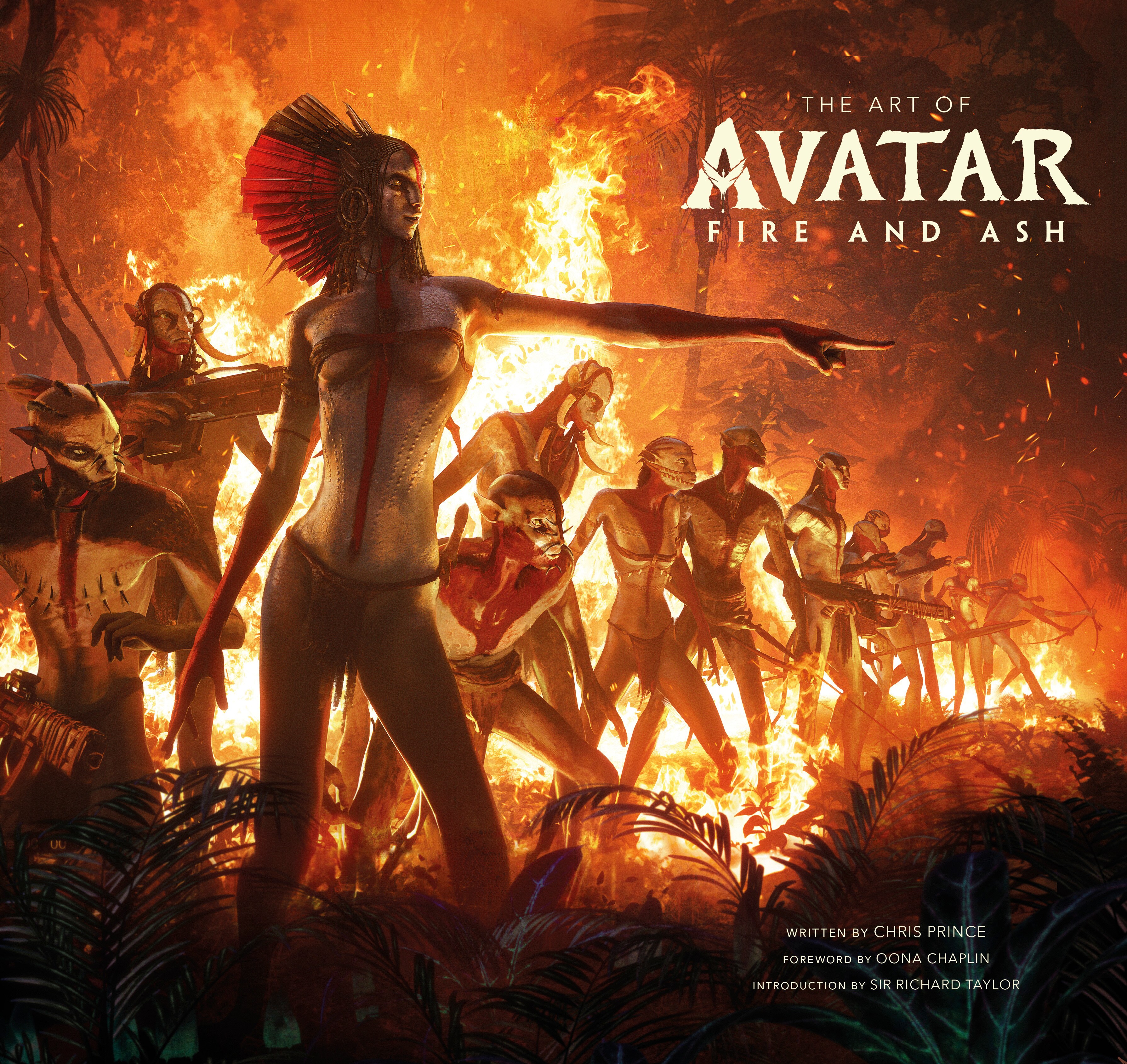
Most concept art is the starting point in film development, but never the final creation. On an Avatar film, concept art is a blueprint, developed through the entire filmmaking process from ideation to final edit. The paintings, rendered months or years before cameras roll, have a way of ending up on screen with uncanny fidelity. The colors and composition transfer from an artist’s imagination to a finished frame so precisely, that seeing both is breathtaking. The Art of Avatar: Fire and Ash is full of awe-inspiring moments; scenes painted in broad, kinetic strokes and costume sketches refined until every bead carries narrative weight. New creatures, new clans, and new corners of Pandora are brought to life with the same biological rigor that has always made this world feel, against all logic, completely real.
Chris Prince took on a challenge when he set out to write The Art of Avatar: Fire and Ash. In the book, he goes deeper into the making of the third Avatar film, tracing the creative decisions, collaborative breakthroughs, and unexpected real-world inspirations that shaped one of the most ambitious productions in film history. We sat down with Prince to learn more about how he got here and what he found when he arrived.
The Kid Who Never Stopped Reading About Movies

Chris Prince’s path to writing about James Cameron’s films is, in the best way possible, completely inevitable. “I’ve always been obsessed with movies ever since I was a little kid,” Prince says. “And when I was a kid, I’d always want to read books and comics based on the movies I loved. So, I think I’ve always associated movies with publishing.” That association never faded. In his twenties, he became a movie journalist, spending his days as close to film as he could get. But Prince’s goal was always something more specific: to become a movie book author and make the very thing that he’d been searching for as a child.
Along his way, he picked up editorial instincts and an eye for design that equipped him with the skills to write and produce his own books and oversee all aspects of their development. His résumé now spans multiple books about the entertainment industry and the professionals who shape it, but the relationship that most defines his career is the one he built with James Cameron over more than a decade of working together.
Prince first encountered James Cameron’s work the same way most people did: through his films. He was shaped by Cameron’s early work — the two Terminator films, Aliens, and The Abyss — watching them over and over, internalizing the rhythm and mechanics of Cameron’s storytelling. When he finally got the chance to work with Cameron directly on Exploring the Deep: The Titanic Expeditions, he found a project that needed the sensibility he’d spent years developing. “When I started on the project, it was a little off-track — it felt quite dry, like a typical historical book,” Prince recalls, “and I wanted to inject some high-octane, James Cameron-style excitement into it.” Cameron was pleased with the result, and the two have continued collaborating ever since. That long-standing working relationship meant that when work on The Art of Avatar: Fire and Ash began, Prince wasn’t starting from scratch. He was building on a foundation of trust, shared language, and a decade-long respect for the source materials.
The Script Is Just the Beginning
When Prince set out to write The Art of Avatar: Fire and Ash, he did what any careful writer would do: He started with the script. He assumed it would give him a clear structure, a map of the territory he’d need to cover. What he found instead was a reminder of something fundamental about the way these films are made.
“What’s incredibly special about the Avatar movies is that the script is just the beginning,” he explains. “Jim and his team are constantly working to make each moment in the film as compelling as possible, and so the scenes are constantly evolving.” By the time Prince began talking to the art and costume teams, the film had already moved well beyond the pages he’d been studying. He had to play catch-up, and in doing so, he discovered angles and information that wouldn’t have otherwise come to fruition.
His interview process reflects that same spirit of ongoing discovery. Every project of his begins with a formal sit-down, but for a book like this, that’s only the opening move. “There are so many potential avenues to explore that you often need to do multiple follow-up interviews, often over email to clear up important points,” he says. What made Avatar particularly unusual — and, for a writer, particularly rewarding — was the nature of the team itself. Unlike most productions where the artist wraps and move on to their next project, the artists behind Avatar are a full-time team with deep institutional knowledge of the world they’ve been building for years, if not decades. “The Avatar folks are a dedicated full-time unit and are extremely knowledgeable and passionate about their work,” Prince says, “which makes my job very easy, because I could just pepper them with a billion questions!”
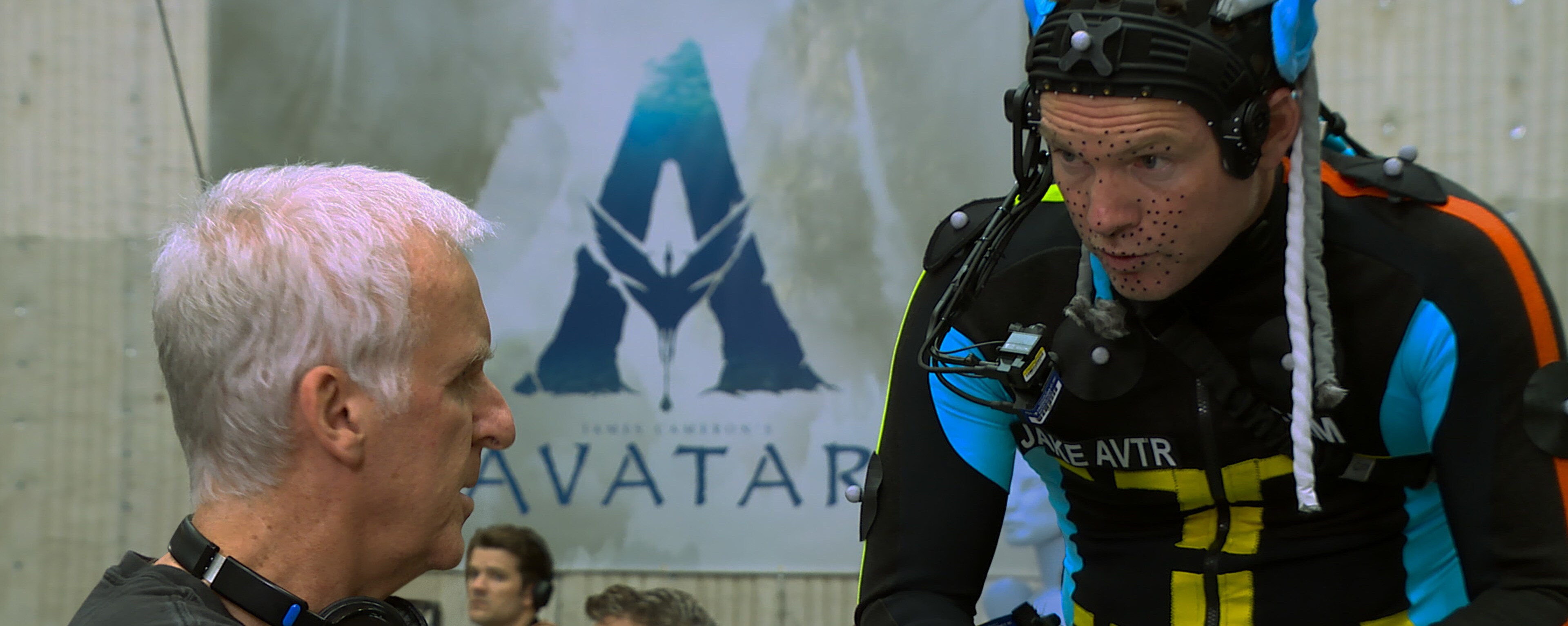
Perhaps the most striking thing he encountered was the fluidity of the creative process itself. “On a regular film, concept art is something that is created early in the production to get all the departments on the same page, but on the Avatar films it never stops developing until the film is in theaters,” Prince says. “I’ve worked on a ton of behind-the-scenes movie books over the years, and I can’t overstate how unique that is.” The boundaries between departments blur in ways that would be unusual anywhere else. The virtual camera team, working out the blocking of a sequence, might arrive at a visual idea that gets folded back into 2D art. Every layer of the production is in conversation with every other layer, right up until the final edit.
Weaving a Tapestry of Artists’ Voices
One of the qualities that distinguishes The Art of Avatar: Fire and Ash from a typical concept art collection is the depth of the voices featured; and that depth didn’t happen by accident. Prince credits the openness of everyone involved, starting with the publisher, DK. “DK were extremely supportive of the book and allowed me to tell a more in-depth story than is common in an art book,” he says. That latitude made space for something richer than a standard showcase of production imagery.
Co-production designers Dylan Cole and Ben Procter encouraged Prince to speak with as many individual artists as possible, understanding that a wider range of perspectives would produce a richer account of how the film came together. Costume designer Deborah L. Scott and her team provided “a remarkable level of detail on the philosophy behind their work and the very tactile process of developing the physical costumes” that have to function both as wearable costumes and a storytelling device. James Cameron himself, as always, brought a strong perspective to his account of the design process. “Sometimes on these kinds of books, you have to work hard to draw out all the information from the various parties,” Prince says, “but on this book the main challenge was to pack all this amazing stuff into a single volume!”
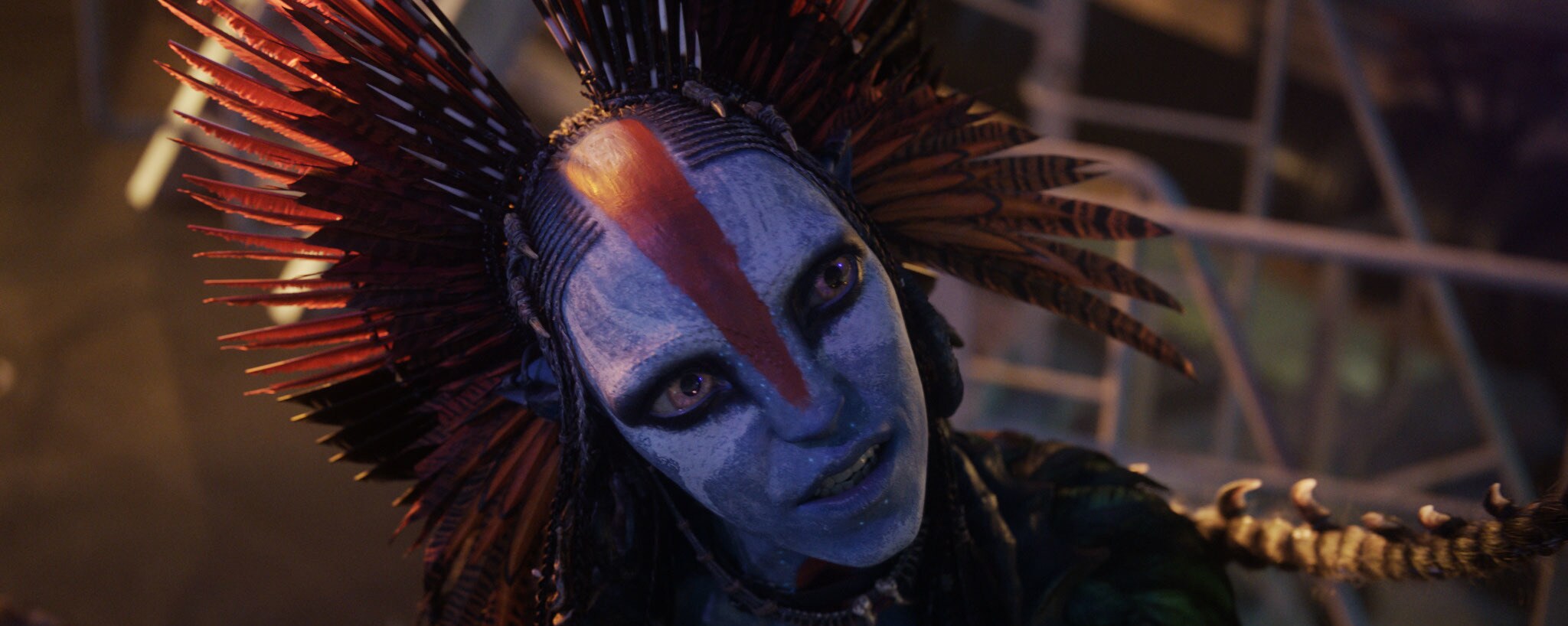
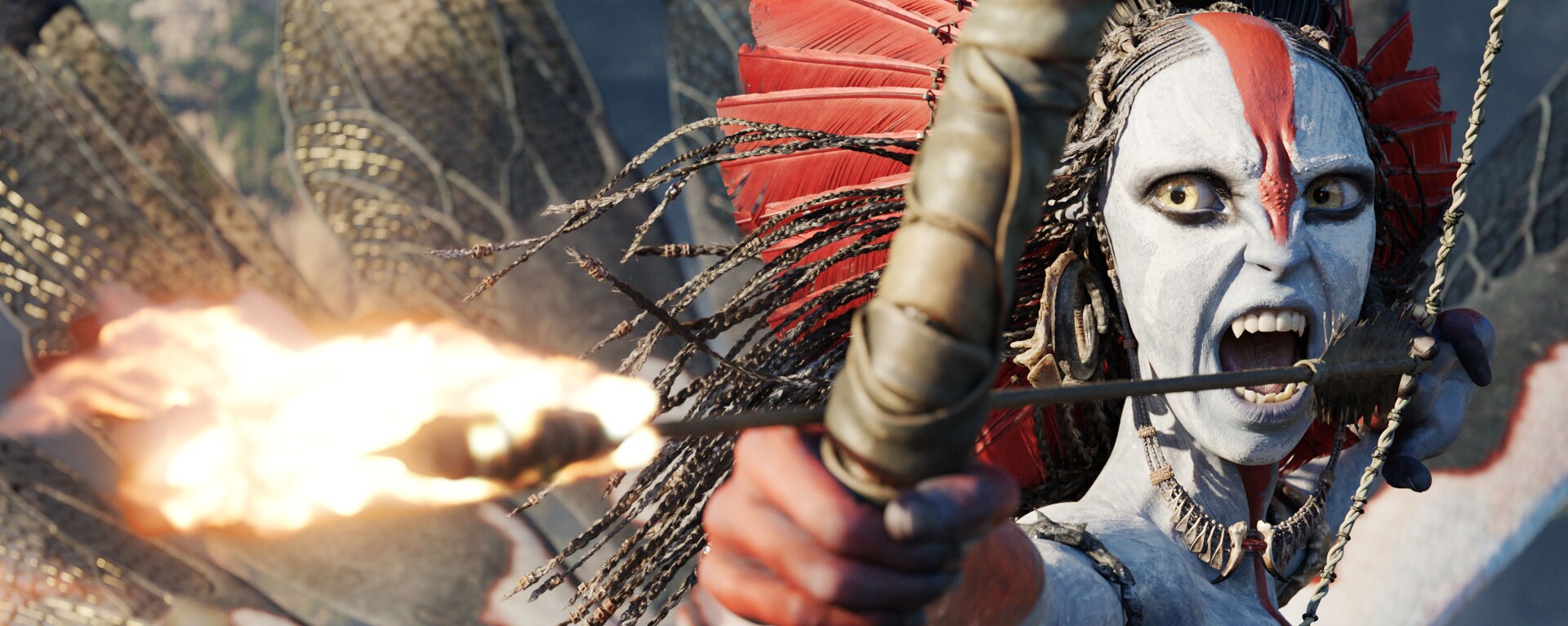
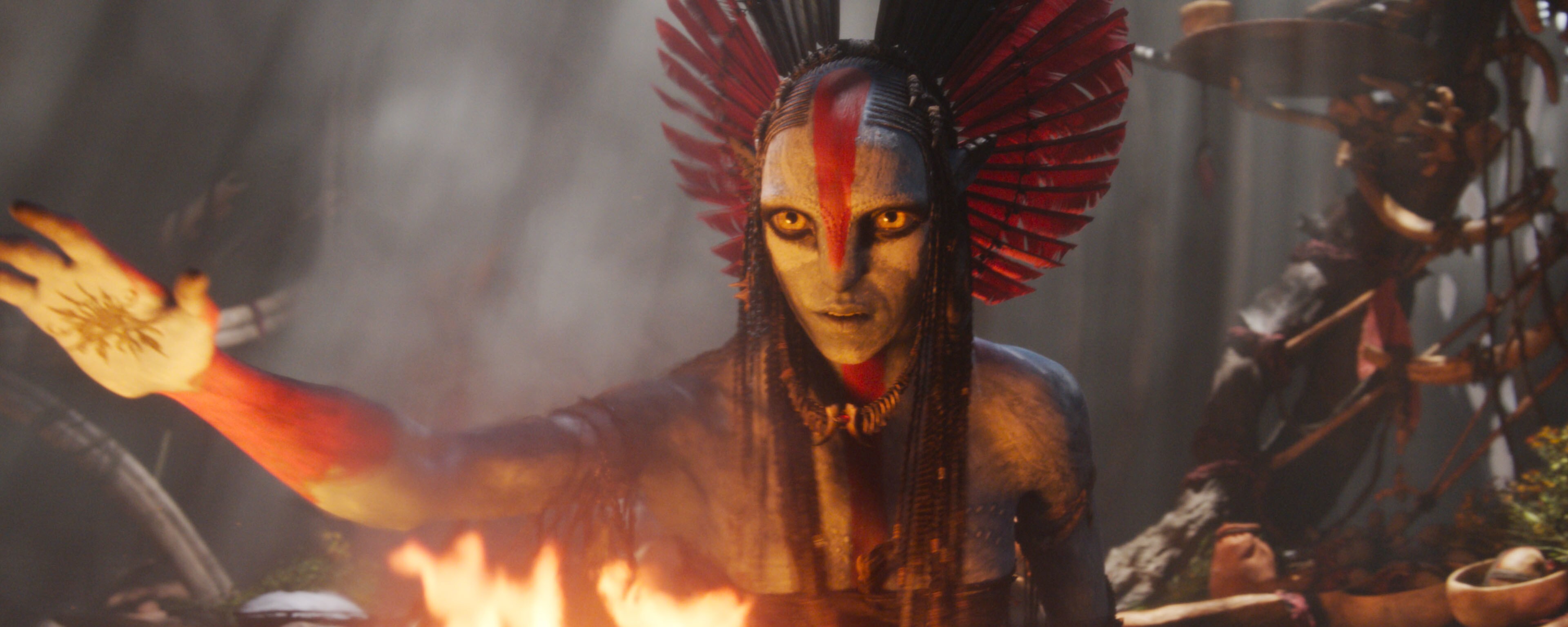
That richness is perhaps most evident in the book’s treatment of Varang, the leader of the Mangkwan, or Ash People, brought to life onscreen by actress Oona Chaplin. Rather than presenting a finished character and a handful of sketches, the book traces the full arc of her creation: from the initial spark of inspiration, through early concepts developed by artist Joseph C. Pepe, to Deborah L. Scott’s final development of the character’s costume and physical presence. This section is exemplary of the book’s larger thesis that the Avatar films are not the vision of a single auteur but the product of a community of artists working at the highest possible level. Cameron, Prince notes, actively resists the auteur label. “He’s constantly harnessing the creativity of his team in a ‘best idea wins’ kind of way,” Prince explains, “and although he knows what he wants, he’s always interested in other perspectives.” That creative openness, Prince believes, is what makes these films so exceptional.
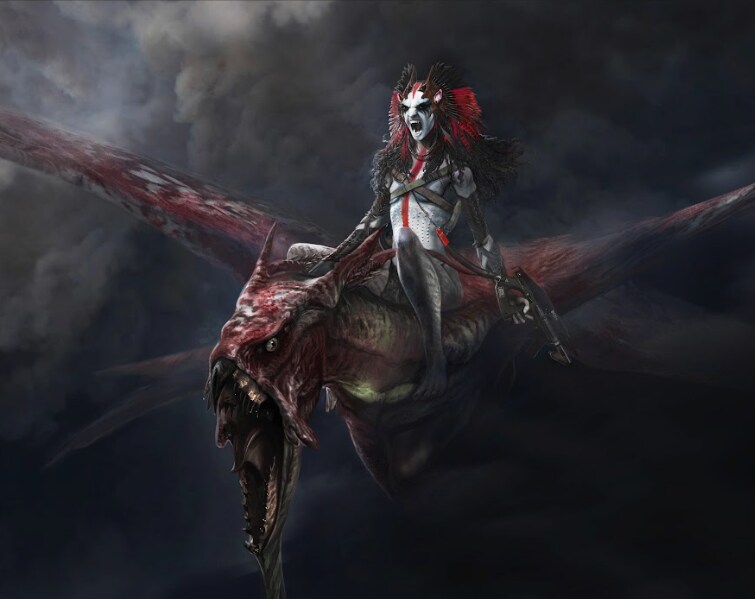
The Ash People, the Leonopteryx, and a Village in Papua New Guinea
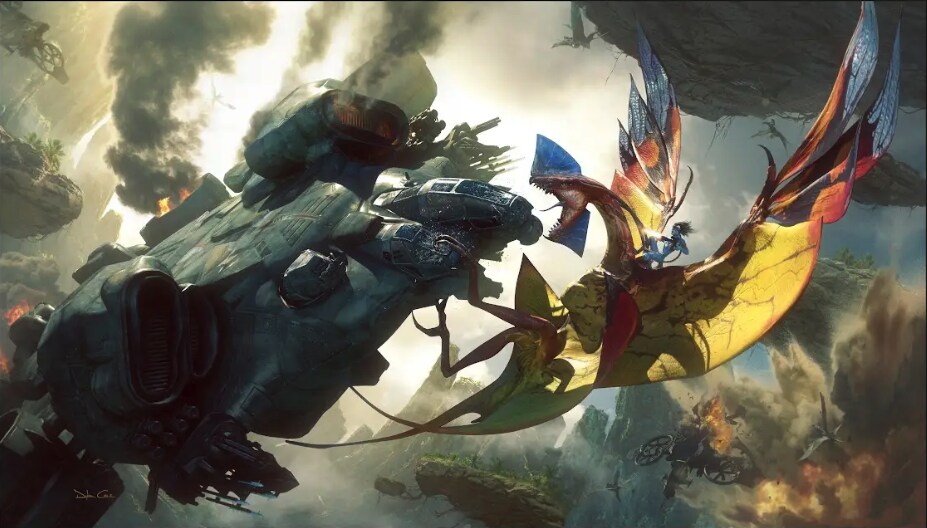
Some images from a production have continued to linger in Prince’s mind long after the book’s completion — like a a piece by Dylan Cole of Jake Sully on the back of the Toruk, just after they reunite. “I’m an absolute sucker for some of Dylan’s big battle pieces,” he says. “Any time Jake is riding to war on the Toruk, I’m in. There’s one particular image of Jake riding the Toruk just after they reunite that I absolutely love. It captures the weight of the moment and the magic of the Avatar saga in a single image.” But the discovery that stuck with him most wasn’t a visual at all. It was a story about children playing in volcanic ash, a world away from Pandora.
Prince has been working with Cameron on a separate project related to Cameron’s record-breaking 2012 solo dive to Challenger Deep. In the course of that work, he learned that Cameron’s expedition had taken him to Rabaul, a township in Papua New Guinea that was destroyed by a volcanic eruption in 1994. While there, Cameron watched as children played in the ashes created from the destruction of their town. The image stayed with the director, eventually becoming the spark of inspiration for the Ash People, one of the new clans introduced in Avatar: Fire and Ash. “Jim likes to keep his exploration career separate from his filmmaking career,” Prince says, “but sometimes the two things inevitably bleed into each other. I was familiar with his trip to Rabaul, but I had no idea it had influenced the Avatar universe until I worked on the book.”
These types of discoveries make writing behind-the-scenes books feel like archeology, uncovering connections that are invisible to audiences but woven through everything they see. Knowing the creativity and thoughtfulness that went into the creation of Avatar: Fire and Ash made watching the finished film an experience unlike any other that Prince can recall. He saw Avatar: Fire and Ash in the screening room at Lightstorm Entertainment, in a space calibrated specifically for Avatar presentations. “Typically,” he explains, “seeing a film you’ve spent six months studying can be underwhelming because there’s no surprise factor.” Avatar: Fire and Ash broke that pattern entirely. “There was such clarity to the 3D, I felt like I was in the movie, rather than watching it, and I was totally absorbed,” he recalls. And then came the moments that gave him goosebumps: spotting a scene designed by Dylan Cole or Ben Procter or one of the other artists that was nearly identical to the concept art he’d been poring over for months. The distance between imagination and the screen had disappeared.
Filmmaking Preservation – There’s No “CGI Button”
There is a persistent misconception about films like Avatar. There’s a sense that because so much of the work is digital, that it must be automatic or generated through artificial intelligence. Perhaps somewhere in the production pipeline, someone presses a button and a world pops out. Chris Prince wants this book to be a definitive rebuttal of that idea.
“I think there’s a tendency to believe that because a film has a strong digital component, it’s somehow created by computers,” he says. “This book really shows how every single decision on the Avatar films is pored over at length by a whole team of artists, led by Jim. There’s nothing easy about an Avatar film, and every element that ends up onscreen requires out-of-the-box thinking, technological breakthroughs, and an incredible level of artistry.” Every component of the concept art, the costumes, the creature designs, the environments, and more are individually crafted and carefully chosen. Every frame of the film is the result of iteration, argument, revision, and commitment from a team of human beings who care deeply about getting it right.
That spirit of creation and collaboration is what Prince hopes The Art of Avatar: Fire and Ash preserves. Not just the images, though they are extraordinary, but the process behind them. The proof that Pandora is handmade.
The Art of Avatar: Fire and Ash is a beautiful book, full of stunning images from one of Hollywood’s more visually ambitious productions. But it’s more than that — it’s a window into a method of filmmaking that’s unlike anything else in the industry today. The artists behind Avatar: Fire and Ash work in a space where concept art never stops, where every creature, plant, and environment are scientifically calibrated, and where the best idea always wins, no matter who comes up with it.
“I hope this book highlights the incredible level of human creativity behind these films,” Prince says. For longtime Avatar fans and newcomers alike, it offers something beyond a theatrical experience. It is an opportunity to slow down, look closely, and understand, piece by piece, how the world of Pandora came to be.
The Art of Avatar: Fire and Ash, published by DK, is available to pre-order and in bookstores everywhere July 21. Stay tuned to Avatar.com to be the first to know about upcoming Avatar experiences.